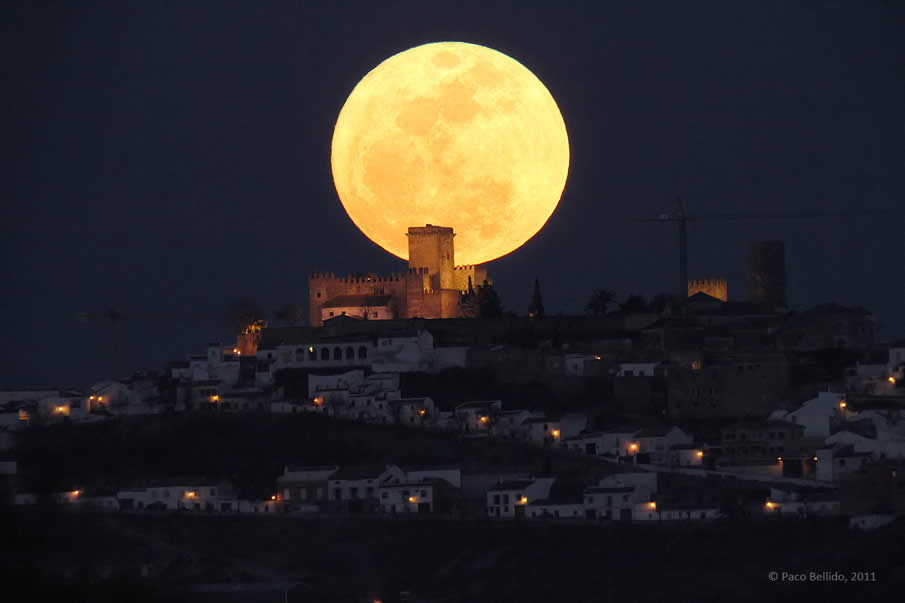
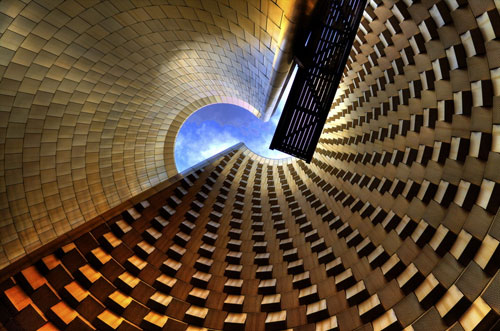
Infographics is the art of translating text information into creative visualizations of a specific topic. Ours was timely. It was about the still looming problem in our beloved home Zamboanga City: the Crisis.
Turning seven months old, 'The Forgotten Crisis' is growing numbers to date. Growing and worsening all the same, the Zamboanguenos are hasty to break free from the string of tragedies that hit them. The armed rebel conflict between the government forces and MNLF has caused tremendous damages physically, morally, and psychologically; then came the days when the rain seemingly did not want to stop, slowly flooding the already miserable camp at the several put up evacuation centers in the city.
There were malicious thoughts on the sudden occurrence of the crisis. Many are forming theories of a conspiracy going on somewhere within the systems of the three-week long crisis. These may or may not be the brutal truth. But the figures that entail this do not lie.
Thursday, March 20, 2014
Monday, February 24, 2014
Adobe Illustrator for the win
It's the first time I used Adobe Illustrator and it was amazing so far.
Take a look at this boring and traditional image of a key. Its oldness adds up to the plainly put up drawing.
But then, vector graphics hit the trend plus a little creativity and voila!
![]() |
| This is a key. A funky one at that. :) |
Then here are more shapes to practice on:
Adobe Illustrator: Bringing life to radically boring images since 1986.
What are Vector Images?
Same as object-oriented graphics, refers to software and hardware that use geometrical formulas to represent images. The other method for representing graphical images is through bit maps, in which the image is composed of a pattern of dots. This is sometimes called raster graphics. Programs that enable you to create and manipulate vector graphics are called draw programs, whereas programs that manipulated bit-mapped images are called paint programs.
What is the difference between vectors and
rasterized/bitmap images?
Unlike JPEGs, GIFs, and Bitmap (BMP) images, vector graphics are not made up of a grid of pixels. Instead, vector graphics are comprised of paths, which are defined by a start and end point, along with other points, curves, and angles along the way. A path can be a line, a square, a triangle, or a curvy shape. These paths can be used to create simple drawings or complex diagrams. Paths are even used to define the characters of specific typefaces.
How do you create vectors?
There are many ways to create a vector: One way is to start with the
(a) Type Tool(b) Shape Tool - Rectangle Tool
- Rounded rectangle Tool
- Ellipse Tool
- Polygon Tool
- Star Tool
- Pen Tool
After finishing the vector activity, I realized that a person who doesn't know how to draw can definitely feel visually artistic through the use of this wonder application: the Adobe Illustrator.
References:
1. http://www.techterms.com/definition/vectorgraphic
2. http://www.webopedia.com/TERM/V/vector_graphics.html
3. http://www.wikihow.com/Create-Vectors-in-Adobe-Illustrator
Thursday, February 13, 2014
Typography Art
Typography Art has been the trend in this especially creative visual generation that we have come to know. It is the arranging and setting of text to form budding images and or an idea.
I created my first typography art. It's none other than.... an image of Jesus Christ!
I can never thank Him enough. For all the days I have depended on Him and Him alone, you could say this is a simple tribute I could offer to Jesus.
The text I used were lyrics from Hillsong United: Still, Here I am to Worship, All about Jesus, At the Cross, and Above All.
It's pretty basic actually since it is my first time to do typography art, this has been my exploration of the Pen Tool in Adobe Photoshop CS5.
Before I did the actual work, I thought it was tedious work.. and I was right! You have to trace lines in order to form that desired wave of text. This consequently makes several texts in the layer box, which could reach hundreds if you don't merge layers.
Typography Art is cool and without a doubt creative. I'd love to learn more about this and the dimensions of the magical Pen Tool.
Sunday, February 2, 2014
Multimedia and its Social and Ethical Issues
When we talk about social and ethical issues related to multimedia systems, the two most defining problems are the exclusivity of the copyright clause and a computer user's appropriate use of the internet.
Copyright refers to the legal protection for people who express ideas and information in a variety of forms. The most common forms resemble the data types that are used in multimedia system: writing, visual images, music and moving images. Computer software is also protected by copyright laws. It is important that when you use data that is not your own it is acknowledged correctly and the author recognised and/or compensated.
Here is a simple guideline as to what can be done with copyrighted works:
Appropriate use of the Internet is an issue of concern throughout society and many organizations monitor online activity users and have guidelines that users are expected to follow. Now that multimedia content is so readily available online, there is even more unease about whether people are being responsible while, for example, at work or school. Many organizations, therefore, have guidelines regarding, for example, the creation, transmission, downloading of any offensive or obscene material.
The typical user has access to almost anything in the internet. A kid as young as four years old could take his self-discovery into a whole new and malicious level. There have been numerous instances of users to upload sexual content and other forms like this. Utmost internet monitoring is the solution here.
Some may abuse the power of voicing out opinions and proclaiming the latest happenings in their lives. Social media, like Facebook and Twitter, depends on user-input. But some have gone overboard in posting status updates like they own your news feed.
The internet is a free place but there must be limitations on the disclosure of probably not-so significant information in one's life.
==============================================================
Reference:
http://www.hsc.csu.edu.au/ipt/mm_systems/7-4/social_ethical_issues.htm
Saturday, December 21, 2013
Elysium
Sometime in the future, citizens were classified to be either
the filthy rich or the slum poor. Max, the protagonist, is one of the poorest
of the poor. He grew up on the overpopulated earth, together with his childhood
friend Frey, dreaming that one day they’ll fly to Elysium. Elysium is an
earth-orbiting space station specifically designed and manned for the privilege
of the well-made residents. Max is under parole and had to work in service. An
incident led him to reach means to survive. He made a deal with Spider with an
exchange of conditions. Eventually, Max was able to save Frey and her daughter
in the hope of bringing earth and Elysium together.
Throughout the film,
major technological advancement is the theme. Robots replaced human work:
police, parole officer, servants, etc. Their weapons were of the most advanced
features. Flying drones have accurate positioning signals. Men were noted to be
wearing exoskeletons to enforce superior strength. And my favourite – the panacea
med-bed, instant detection and healing of citizens. No down payments, personal
data fill up, and what have you.
If only the most striking part is in question, then no need
to ask more. When Max was at risk of dying due to radiation deterioration, he
accepted whatever deal he made with Spider in order to live, this includes
screwing him up an exoskeleton. That part of the movie totally shaken the peace
in me. The visuals made it seem knives were piercing Max’ body and screws were
spiraling down deep in his flesh. It is shocking to know that he could still
live after that harsh operation.
Past, present, or future, politics is still undeniably
dirty. There will always be a large gap between the marginalized and the rich.
The movie Elysium only magnified the situation but the reality is not far from
it. To add in this bizarre reality is the advancement of technology in our
lives. Technology has made a big impact on us that it is impossible to detach
from it.
Friday, December 13, 2013
Fifth Generation Computers: Artificial Intelligence
More than ten years ago, the Fifth
Generation Computer System was still a plan waiting to be developed into a full
technological advancement. The Fifth generation computing devices are still in development, though there
are some applications, such as voice recognition,
that are being used today. The use of parallel processing and
superconductors is helping to make artificial intelligence a reality. Quantum computation and
molecular and nanotechnology will radically change the face of
computers in years to come. The goal of fifth-generation computing is to
develop devices that respond to natural language input
and are capable of learning and self-organization.
Fifth generation computers are in
developmental stage which is based on the artificial intelligence. The goal of
the fifth generation is to develop the device which could respond to natural
language input and are capable of learning and self-organization. Quantum
computation and molecular and nanotechnology will be used in this technology.
So we can say that the fifth generation computers will have the power of human
intelligence.The other properties of fifth generation computers are for parallel processing, it used superconductors, used in speech recognition, used in intelligent robots, and used in artificial intelligence.
Monday, November 25, 2013
Computers are life-savers
How can we use computer and communications technology to minimize the effects of calamities such as earthquakes and super typhoons?
Natural calamities and even disasters caused by man are inevitable, but closely responding to them when signals of proximity increase can still be helped through the power of technological innovation. It seems today that all can be answered through the help of computers and communications technology. Human beings are geniuses, therefore nothing shall hold us down, not even the wrath of Mother Earth.
Let us take for example the most recent devastation Central Philippines met: Super Typhoon Haiyan (Yolanda). Days before, PAGASA notified the country of a very fierce typhoon coming our way capable of inducing a storm surge. Just by this, we can formulate a lot of questions already. (1) How did PAGASA become aware of this super typhoon? (2) What in the world is a storm surge? There is only one answer for these: computers.
Government agencies like PAGASA, though not state of the art, depend highly on the functions of computers and technology to monitor the forming, movement, and what-have-you of natural phenomena from low pressure areas to super typhoons, and by PHIVOLCS from volcanic eruptions to earthquake intensities, and so on. The second question is answered when one look it up a search engine through a computer. Confusion was one of the reasons why residents in the affected areas have not prepared as much as they should have.Through computers and communications technology, there will be awareness promotion spread throughout. As long as internet connection is provided and phone signals are strong, then people should have no excuse to not know what to do during calamities.
By now you can tell that without the invention of computers and communications technology, things would have been worse and totally out of hand. Nobody could have the least bit prepared for it, people could be leisurely spending their time at home without any preparations whatsoever. Those affected, without cellphones and recording devices, could not have let the whole world encounter the real deal during the typhoon's landfall. And after that, relatives lost could have never been found if telecommunication companies and news outfits didn't cover them.
We have a lot to thank computers for. Some lives may not have been saved when the need arose, but a multitude more have been spared because of this heaven-sent technology.
Tuesday, November 12, 2013
Importance of becoming computer literate and computer competent
In this ever changing fast-pacing world we live in, a person would be called nonexistent in a few years' time if he has no traces in the digital spectrum. Of course, being computer literate starts once a man finds interest in it, regardless of age and status. My parents, for example, are embracing the magnificence of the new technology even when they only know the basics. No one is exempted from not learning how to operate a computer. In this digital age, one is left behind and will be missing out on lots of opportunities if he is afraid of exploring a 'complicated' device of softwares and viruses.
A computer literate and competent individual means he has sufficient knowledge about the patterns of a computer. He is familiar in writing documents, presentations, spreadsheets, and the like. He has several accounts made in the social media world with creative usernames and numbers in them. He is aware that downloading free stuff on the internet over torrent or whatsoever is illegal and is called stealing in layman's term. He makes sure to log out his personal account when in a public computer because hacking is a dirty business to face. He also resists clicking on popping messages that congratulate him for being the 70,093,260th visitor and therefore wins the Empire State Building.
Knowing all these and more entails one to be computer literate and competent in using it as almost everything we encounter everyday is produced with a computer. A person who is computer literate has a large advantage over somebody who isn't. More job opportunities will be open for this person, thus promoting him from whatever career path he may have gone to. There will be no excuses not to communicate to another and be informed in the latest happenings because it is just literally a few clicks away. We may not know how to assemble a computer per se but what is important is to learn the twists and turns in a device such as a computer.
Sunday, September 8, 2013
All about editing
Cuts, shots, scores. All of these fall under a magical compilation called Video Editing. This part of the post-production is the primary activity wherein the success of the whole pre- and production is seen. The beauty of the film lies within the techniques and smoothness of ne process. Video editing is important for it values behind-the-camera processes and the people responsible for it. We experience visually the effort and brilliance of the makers of the film through this editing.
With video editing, so much outputs can be brought to life. Films, music videos, wedding and debut videos, video presentation s for a report, advertisements, TV shows, and many many more are outputs of video editing.
Here are some of the editing techniques an editor and the director must specially know:
1. JUMP CUT
- Cutting a scene from one range to another in a same visual axis.
Jump cuts are jarring and disconcerting, and pretty much unacceptable, unless that is the effect you want for narrative reasons. Jump cuts can also be used to compress time.
2. CUTTING TO AN EMPTY FRAME AND LETTING THE SUBJECT ENTER THE FRAME.
- This is generally cutting on action to a smooth transition. In this, we cut from one shot to another, just an action is taking place.
3. CUT AWAY
- Inserting shots which are far from the real action or a shot of a subject which is not in the main scene. Shoot many cut away shots especially in shooting documentaries and interviews.
4. THE 180 DEGREE RULE
- The camera must stay on only one side of the actions and objects in a scene. An invisible line, known as the 180 DEGREE LINE or AXIS OF ACTION, runs through the space of the scene. The camera can shoot from any position within one side of that line, but it may never cross it.
5. MONTAGE
REFERENCES:
1. http://www.lavideofilmmaker.com/filmmaking/film-editing-tips.html
2. http://www.slideshare.net/JaneenGatty/camera-movement-and-editing-techniques
3. http://www.steves-digicams.com/knowledge-center/how-tos/film-and-video-production/post-production-8-tips-for-editing-montages.html#b
With video editing, so much outputs can be brought to life. Films, music videos, wedding and debut videos, video presentation s for a report, advertisements, TV shows, and many many more are outputs of video editing.
Here are some of the editing techniques an editor and the director must specially know:
1. JUMP CUT
- Cutting a scene from one range to another in a same visual axis.
Jump cuts are jarring and disconcerting, and pretty much unacceptable, unless that is the effect you want for narrative reasons. Jump cuts can also be used to compress time.
2. CUTTING TO AN EMPTY FRAME AND LETTING THE SUBJECT ENTER THE FRAME.
- This is generally cutting on action to a smooth transition. In this, we cut from one shot to another, just an action is taking place.
3. CUT AWAY
- Inserting shots which are far from the real action or a shot of a subject which is not in the main scene. Shoot many cut away shots especially in shooting documentaries and interviews.
4. THE 180 DEGREE RULE
- The camera must stay on only one side of the actions and objects in a scene. An invisible line, known as the 180 DEGREE LINE or AXIS OF ACTION, runs through the space of the scene. The camera can shoot from any position within one side of that line, but it may never cross it.
5. MONTAGE
-This includes a rapid succession of different images that all tend to be associated with a specific idea. Normally these montages combine many different pictures. These montages are used in film, TV and video all the time as most title sequences of films are montages. The power of the montage comes from showing many images instead of a single picture.
REFERENCES:
1. http://www.lavideofilmmaker.com/filmmaking/film-editing-tips.html
2. http://www.slideshare.net/JaneenGatty/camera-movement-and-editing-techniques
3. http://www.steves-digicams.com/knowledge-center/how-tos/film-and-video-production/post-production-8-tips-for-editing-montages.html#b
Sunday, September 1, 2013
Film Review: HUGO
Hugo Cabret (Asa Butterfield) and George Melies (Ben Kingsley) first struck a
conversation when the boy steals machinery pieces in order to revive a broken automaton,
which was the only living tangible memory Hugo has with his late father. The
film then introduces the casts by Hugo peeking behind a great clock, usually
behind the no. 4. One thing led to another when the time came for Hugo to learn
that the automaton was first brought to life by George Melies himself, the
grumpy old man behind his toy store counter. With the help of Melies goddaughter, Isabelle (Chloë Grace Moretz), Hugo will learn that the automaton doesn't contain a hidden message from his
late father. Eventually, Hugo and George reconciled each other as they discover
together the past and the reawakened best kept past.
What I loved about Hugo is its beautiful
cinematography. Surely, you will go to an exciting adventure with this film and it is all because of the visuals. From the very beginning establishing shots to the last, Hugo
didn't fail to capture the film's audience. This factor is the backbone of this
film. With only its cinematography and as well as the lighting, Hugo can be one
of the best, in shots and in visual effects. Scenes were mostly shot in a studio, but it paid well and done justice coerced with computer-generated effects to stun its viewers.
True people like George Melies and his
story on the birth of films being included as the one of the main story lines is
definitely a double plus. The monumental moon in one of Melies' films is only a depiction
on how wonderful Melies' mind works. His creativity had become a vital aspect
as he continues to search ways in producing films while war goes on at that
time.
Although with the film's history-based story line, loopholes can be distinguished. Aside from the factual mistakes like time of an event's occurrence and the location of famous landmarks in the film, there are weird and irrelevant parts, too. One of these is how Hugo so much revolved around his father and his last memory, and actually became an overrated part of the film. This, only to find out, was only a minor detail in the connection of the main story of Hugo and Melies. It lost the importance of Hugo's late father, as the film established greatly on how Hugo's father came across the automaton. And in the end, the audience didn't understand the relevance of Hugo's father's great existence in the film. Another loophole I caught was the faulty continuity of the shots. The obvious, I guess, is in this one scene where Hugo finds the end tail of the key buried in a train track on the first frame. Next frame shows the whole key atop a wood plank of the train track. Others need a keen eye in spotting them, but it's still faulty either way.
Director Martin Scorsese's Hugo takes you to this historical-based adventure where reality does not seem so much as so. George Melies' prowess in the development of the film era is to say an understatement. Melies, in person, with his undeniable wildly creative mindset bursting with talent is highly commendable. All of these elements and more accompanied by a capturing musical scoring all throughout the film worked.
For this film, I'll give it 8.5/10. It's not the most perfect and error-free film, but the visuals saved it over-all and perhaps, my amazement at George Melies' intelligence as well.
Monday, August 5, 2013
Different Shot Types
If you want to tell a story, you need to learn the basics first.
Here is a video showing the different basic types of shots you can do with your camera:
Those were the:
1. Extreme Long Shot - mostly used for establishing the scene
2. Long Shot - capturing the whole body
3. Medium Shot - capturing half of the body
4. Medium Close-Up - also called the 'bust shot'; capturing until the chest area
5. Close-Up Shot - mainly focuses on the head
6. Extreme Close-Up - zooming in really closely on something
7. Cut-In - showing a subject within the scene
8. Cutaway - showing a subject not part of the main scene
9. Over-the-Shoulder - capturing the back of one of the subjects while viewing somebody else facing the camera
10. Cross Shot - capturing the subject away from the camera or diagonally
11. Two Shot - includes two people in the frame
12. Three Shot - includes three people in the frame; may form a triangle
13. Group Shot - includes four or more people in the frame
(3) Vectors:
1. Graphic vector - lines point somewhere
2. Motion vector - there is a moving object
3. Index vector - literally pointing somewhere
While deciding whether or not to use this type of shot or not, you also need to take into account some "rules" in videography. There are the rule of thirds, proper exposure, headroom, breathing space, and what have you. But of course, you may always break the rules. Show your creative side and find those perfect angles!
Friday, July 26, 2013
DSLR Settings "Jargons"
Learning DSLR camera jargons in a very uncomplicated way!
First, let's break down technical terms in the digital world:
1. SHUTTER SPEED - Adjusting this makes it possible for moving subjects to be sharp in a photo or if you want the effect to be blurry in nature. You may achieve this by adjusting a dial in your DSLR camera.
Remember: *The higher the number (i.e. 1/250) = the darker the photo; sharper photo
*The lower the number (i.e. 1/1.5) = the brighter the photo; more blurred
So you must adjust the other settings to fit a proper exposure.
2. F-STOP/APERTURE - Opening of a camera's aperture to permit light, similar to our human iris. If you want to create a photo with either a shallow or wide depth of field, this is what you need to adjust. You may adjust this by pressing the f-stop button AND rotating the dial.
Remember: *The lower the F-stop (i.e. f/2.8) = the larger the opening of the lens; exposure is brighter; more shallow depth of field
*The higher the F-stop (i.e. f/22) = the smaller the opening; exposure is darker; greater depth of field
3. ISO - This is simply the sensitivity to light. This darkens or brightens a photo exposure. To adjust, find the ISO menu and from there, choose the ISO number.
Remember: *The lower the ISO (i.e. ISO-100) = darker the photo; lower noise quality
*The higher the ISO (i.e. ISO-3200) = brighter the photo; higher noise quality
-----------------------------------------------
Any questions? :)
Photos are all taken by me. ©
First, let's break down technical terms in the digital world:
1. SHUTTER SPEED - Adjusting this makes it possible for moving subjects to be sharp in a photo or if you want the effect to be blurry in nature. You may achieve this by adjusting a dial in your DSLR camera.
Remember: *The higher the number (i.e. 1/250) = the darker the photo; sharper photo
*The lower the number (i.e. 1/1.5) = the brighter the photo; more blurred
So you must adjust the other settings to fit a proper exposure.
| Shutter speed: 1/250; F-stop: f/5.6; ISO-6400 |
| Shutter speed: 1/8; F-stop: f/22; ISO-6400 |
*Camera used: Canon EOS 1100D
2. F-STOP/APERTURE - Opening of a camera's aperture to permit light, similar to our human iris. If you want to create a photo with either a shallow or wide depth of field, this is what you need to adjust. You may adjust this by pressing the f-stop button AND rotating the dial.
Remember: *The lower the F-stop (i.e. f/2.8) = the larger the opening of the lens; exposure is brighter; more shallow depth of field
*The higher the F-stop (i.e. f/22) = the smaller the opening; exposure is darker; greater depth of field
| Shutter speed: 1/1250; F-stop: f/5.6; ISO-3200 |
| |
| Shutter speed: 1/60; F-stop: f/32; ISO-3200 |
*Camera used: NIKON D3100
3. ISO - This is simply the sensitivity to light. This darkens or brightens a photo exposure. To adjust, find the ISO menu and from there, choose the ISO number.
Remember: *The lower the ISO (i.e. ISO-100) = darker the photo; lower noise quality
*The higher the ISO (i.e. ISO-3200) = brighter the photo; higher noise quality
| Shutter speed: 1/4; F-stop: f/25; ISO-200 |
| Shutter speed: 1/50; F-stop: f/25; ISO-3200 *Camera used: Canon EOS 1100D |
-----------------------------------------------
Any questions? :)
Photos are all taken by me. ©
Friday, July 12, 2013
Five types of lenses
#1: WIDE ANGLE LENSES
DESCRIPTION: A standard lens has a focal length range of 35-70mm. The most common standard lens is a fixed 50mm lens.
#3: MEDIUM TELEPHOTO/PORTRAIT LENS
DESCRIPTION: The focal range between 80-135mm is nearly always used by portrait photographers. These are specialist lenses, but can be surprisingly reasonably priced.
#4: TELEPHOTO
#5: SPECIALIST LENSES
B) Macro
-----------------------------------------------------------------------------------
REFERENCES
1. Types of Camera Lenses: Understanding Various Lenses and Their Functions by Jo Plumridge (http://cameras.about.com/od/advanceddigitalcameras/tp/types-of-camera-lenses.htm)
2. DSLR Lenses – An Introduction by Darren Rowse (http://digital-photography-school.com/an-introduction-to-types-of-dlsr-lenses)
DESCRIPTION: Traditionally, a super wide-angle lens is classified as anything under 20mm. Wide-angle is 21-35mm. With the advent of digital cameras, and the APS-C format, camera manufacturers have also started producing specific lenses for this format. Wide-angle lenses for crop frame DSLRs range from 10-24mm, with a few going down to a super wide 8mm.
USAGE: Photographing landscapes and architecture, although they are often also used for photographing large groups of people.
#2: STANDARD LENSES
DESCRIPTION: A standard lens has a focal length range of 35-70mm. The most common standard lens is a fixed 50mm lens.
USAGE: Standard lenses are most commonly used for documentary and street photography, where photographers need to move quickly and capture an interesting point of action. Pioneers of modern street photography, such as Henri Cartier-Bresson, always used a 50mm lens, choosing to move themselves around so as to best frame an image.
#3: MEDIUM TELEPHOTO/PORTRAIT LENS
DESCRIPTION: The focal range between 80-135mm is nearly always used by portrait photographers. These are specialist lenses, but can be surprisingly reasonably priced.
USAGE: Fixed lenses at these lengths produce ideal framing for head and shoulders shots.
#4: TELEPHOTO
DESCRIPTION: Any lens with a focal length of between 135mm and 300mm is a true telephoto lens. Manufacturers make a huge range of lenses in this range ... at an equally large range of prices!
USAGE: Telephoto lenses are traditionally used for sports and wildlife photography, but their essential function is to bring distant objects closer.
#5: SPECIALIST LENSES
DESCRIPTION: These have a focal length of more than 300mm
USAGE: Used by dedicated sports and wildlife photographers.
B) Macro
DESCRIPTION: These lenses are able to focus closer to an object than normal lenses, offering a 1:1 ratio.
USAGE: They are used for still-life photography of small objects. These lenses are specifically designed for shooting objects up close.
C) Fisheye
DESCRIPTION: These are on the edge of wide-angle lenses, and give a distorted view of the subject matter.
USAGE: The center of the image is magnified, and objects diminish in size in all directions around it.
-----------------------------------------------------------------------------------
REFERENCES
1. Types of Camera Lenses: Understanding Various Lenses and Their Functions by Jo Plumridge (http://cameras.about.com/od/advanceddigitalcameras/tp/types-of-camera-lenses.htm)
2. DSLR Lenses – An Introduction by Darren Rowse (http://digital-photography-school.com/an-introduction-to-types-of-dlsr-lenses)
Sunday, June 23, 2013
The Philippine Cinema: A walk through history
1. The Arrival of Lumiere Cinematographe
With it he bought 30 film titles. He did the acquisition with his savings, and evidently, with the financial backing of Liebman and Peritz.
By August, 1897, Liebman and Peritz presented the first movies on the Lumiere Cinematograph in Manila. The new cine was set up at Escolta, corner San Jacinto, the hall formerly occupied by the Ullman Jewelry shop.
A test preview was presented to a limited number of guests on August 28. The inaugural show was presented to the general public the next day, August 29, 1897.
During the first three weeks, Ramos had a selection of ten different films to show, but by the fourth week, he was forced to shuffle the 30 films in various combinations to produce new programs. These were four viewing sessions, every hour on the hour, from 6:00 P.M. to 10:00 P.M. After three months, attendance began to slacken for failure to show any new feature. They transferred the viewing hall to a warehouse in Plaza Goiti and reduced the admission fees. By the end of November, the movie hall closed down.
2. The First Movie Shot in the Philippines
Impelled desperately to attract patronage and as a matter of survival, Ramos, using the Lumiere as a camera, locally filmed Panorama de Manila (Manila landscape), Fiesta de Quiapo (Quiapo Fiesta), Puwente de España (Bridge of Spain), and Esceñas Callejeras (Street scenes), in 1898. Notwithstanding the possibility that some cameramen aboard an ocean liner or naval expedition might have earlier filmed the enchanting panorama of Manila, Antonio Ramos thus became the first motion picture producer in the Philippines.
Among the pioneers who left documentary evidences of their visits to the Philippines were: Burton Holmes, father of the "Travelogue" who made the first of several visits in 1899; and made the Battle of Baliwag; Kimwood Peters who shot the Banawe Rice Terraces and Raymond Ackerman of American Biography and Mutoscope who filmed Filipino Cockfight and the Battle of Mt. Arayat.
In 1905, Herbert Wyndham, shot scenes at the Manila Fire Department; Albert Yearsly shot the Rizal Day Celebration in Luneta 1909; in 1910, the Manila Carnival; in 1911, the Eruption of Mayon Volcano; the firstAirplane Flight Over Manila by Bud Mars and the Fires of Tondo, Pandacan and Paco; and, in 1912, the Departure of the Igorots to Barcelona and the Typhoon in Cebu.
Filmmakers, indeed, covered wide ranges of the Philippines: Zamboanga children diving for coins thrown from the ship's deck; Muslim ladies ogling at the camera; fiestas, carabao races, fluvial parades, religious processions, panoramic shots of Philippine cities and towns; gold mining in Paracale; concerts at the Luneta, or the construction of the Manila Hotel on land reclaimed from the Manila Bay.
3. The Establishment of Movie Houses
♦ Film showing was not resumed until 1900. The man who opened the first hall exclusively for movie viewing that year was a British named Walgrah who naturally called his establishment Cine Walgrah, located at No. 60 Calle Santa Rosa in Intramuros.
♦ The second movie house was opened in 1902 by a Spanish entrepreneur, Samuel Rebarber, who called his building, Gran Cinematografo Parisien, located at No. 80, Calle Crespo, Quiapo.
♦In 1903, Jose Jimenez, a stage backdrop painter, set up the first Filipino-owned movie theater, the Cinematograpo Rizal. This was located on Azcarraga street, in front of Tutuban Train Station
The assurance of abundant and continuous supply of films at cheap introductory prices brought a landslide of movie theaters. The first of these was Cine Anda which opened on August 8, 1909, operated by two American Manila Policemen, Frank H. Goulette and Eddie Teague, others followed: It, Paz, Cabildo, Empire, Majestic,Comedis, Apollo, Ideal, Luz and Gaity appeared between 1909 and 1911. Zorilla, the vanguard of zarzuela and opera presentations, switched to showing films in late 1909, while Grand Opera House began to include movies in-between vaudeville number in 1910. Likewise, moviehouses mushroomed in the Provinces which had electricity . To date, among Asean countries, the Philippines has myriad moviehouses established from the urban to the remotest rural areas.
The first story film made in the Philippines- Rose of the Philippines may have been produced on location in Manila in 1909 by the IMP Company-- Carl Laemmele's Independent Moving Picture Company, out of which grew the Universal Pictures Corporation. Some film historians dispute this contending it must have been a slide show. But the IMP released this 760 foot film (eight minute's screening time) in the U.S. theaters in January, 1910. When it was released in Manila in 1911, Rose of the Philippines, was advertised in the Manila Times as "among the first films produced locally-a dramatic story from the days of the Empire."
5. The First Movie with Sound
By 1930, the talking pictures was already one year old in the country with the showing of Syncopation, the first American sound film, in Radio theater, Plaza Santa Cruz. The event naturally incited competition among local producers and filmmakers as to who would create the country's first talkie. On December 8, 1932, an article came out in Graphic magazine featuring the movie, Ang Aswang (The Vampire). The feature enthused that the said film will be the country's first talkie. Apparently, as attested by those who remember, the film did not turn out to be a completely sound film. In all likelihood, the honor of having made the very first talkie properly belongs to Jose Nepomuceno. His Film Punyal na Guinto (Golden Dagger), which premiered on March 9, 1933, at the Lyric theater, was credited as the first completely sound movie to all-talking picture.
In 1912, New York and Hollywood film companies started to establish their own agencies in Manila to distribute films. By 1915, the best films of both Europe and U.S. were being enjoyed by Filipino audiences in Manila and the Provinces.
When World War I (1914-1918) choked off the production of European studios, Manila theater managers turned to U.S. for new film products. With the variety they offered, American Production-distribution-exhibition combinations quickly dominated the Philippine film market. It has stayed that way since then-- until now!
In 1937, the first Filipino movie to achieve international plaudit was Zamboanga, a picture starred in by Fernando Poe and Rosa del Rosario. Hollywood director Frank Capra praised the film as the most exciting and beautiful picture of native life he had ever seen. Manuel Conde's Genghis Khan, released in 1950 was a rave at the Venice Film Festival in 1952; and dubbed in French, it was shown in Paris in 1954. Inspired by Conde's picture, Hollywood remade Genghis Khan, with John Wayne as its lead actor. The people who had seen both pictures adjudged that the latter was incomparable to the former in terms of authenticity.
Undoubtedly, the 5th and the 6th decades were the Golden age of Philippine cinema with subsequent films making a mark in the overseas scene: Kandelerong Pilak, Ifugao, Anak Dalita, Badjao, Anak ng Dagat, to name just a few, swept awards at the Cambodian, Asia and Berlin Film Festivals. Even at the annual Asian Film Festival with a dozen countries taking turns in hosting the major filmfest (now the Asia-Pacific Film Festival with 18 countries), there was a tacit acceptance that the Philippine cinema was, at the time, the undisputed leader in the continents film scene.
A British film crew also visited the Philippines, and filmed, among other scenes, the Pagsanjan Falls (Oriental, 1911) in kinemakolor. Bert Yearley's Oriental Films, which commissioned this production, generated some excitement by offering six months free movie passes to the lucky movie patron who could guess to the closes minute the arrival of the steamship "Empress Russia" which was bringing the processed film from London. During the 5th decade of the 20th century, Filipinos awesomely seen Hollywood's first full length picture in living Technicolor. Filipino local producers presented too, during this period, their own full length pictures in color and one of which was Prinsipe Amante (Prince Amante). But inevitably, the color was imperfect due to technical deficiency. However, Filipino technicians were quick to cope up with the fast technical development, so that by the turn of the 6th decade, they succeeded in presenting to the public some full length pictures in living Eastmancolor, one of which was Ito ang Pilipino, by J.E. Production. The lead actor was Mr. Joseph Estrada himself. By the turn of the 7th decade, local producers and filmmakers ceased to produce pictures in black and white.
The Government established the Board of Censors for cinematographic films in 1912, It was in constant operation until it was superseded by the Board of Censorship for Moving Pictures in 1929. This is now the Movie and Television Review and Classification Board (MTRCB).
The government also imposed the first taxes on film in 1915, the same year income taxes were imposed. Direct taxes were slapped by the national government on "kinetoscope, biographs, cinematographs, magic lanterns and similar picture-projecting devices.
Decrying that the imposition of government amusement tax (G.A.T.) was confiscatory, the film producers and distributors pleaded: "Moving pictures have provided more people in every country of the world with wholesome amusement and at a price that the poorest can pay than any amusement invented since the world began, and have become almost a necessity to a great many people of all classes, and nowhere are they considered a luxury." Nevertheless, the Bureau of Internal Revenue started collecting taxes on film in 1916.
The first association of motion picture producers and distributors was organized in 1911-- by American, Spanish, Filipino producers and theater managers-- to fight the impending imposition of censorship, and later to lobby against taxes. It was censorship that caused them to unite; it was taxes that made their union permanent.
During the 5th decade, however, film productions became one of the major industries of the country. It contributed to the national government hundreds of million pesos in terms of revenues. The hope of the filmmakers and distributors to eliminate taxes waned out as their enthusiasm in the struggle to fight censorship withered away.
Realizing the importance and the contributory value of the movie industry to the government; and to have a closer supervision and extend the much needed assistance to the industry, a Presidential Decree was issued creating the Film Academy of the Philippines. Under its umbrella are the different organizations and guilds of the industry's working forces, to wit:
- MOWELFUND - Movie Welfare Fund
- KAPP - Katipunan ng mga Artista ng Pelikulang Pilipino
- KDPP -Kapisanan ng mga Director ng Pelikulang Pilipino
- DGPI - Directors Guild of the Philippines, Inc.
- SGP - Screenwriters Guild of the Philippines
- FEGMP - Film Editors Guild for Motion Pictures
- PDGP -Production Designers Guild of the Philippines
- STAMP - Sound Technicians Association for Motion Pictures
- ADPM - Assistant Directors and Production Managers
- FSC - Filipino Society of Cinematographers
- UFIMDAP- United Film Music Directors Association of the Philippines
- OSFILM - Organization of Specialized Filmmakers
- AFW - Actor's Workshop Foundation
- PMPPA - Philippine Motion Picture Producers Association
- MPDAP - Movie Producers & Distributors Association of the Philippines
It was Jose Nepomuceno who came on the scene and realized the challenge and promise of cinema from a different perspective. He saw cinema, not only as a profitable entertainment fare, but as a unique medium with which to document the unfolding development of the Philippines.
It is interesting to read an observation of a film reviewer in the "The Citizen" who, after seeing Nepomuceno's Dalagang Bukid in 1919, was convinced that excellent local movies could project the Philippine condition abroad as no other medium could. To quote:
"It is a sad truth to mention that our country is practically unknown in most part of the globe. Now, more than ever, the world needs much enlightenment with regard to our situation so that our foreign commerce may expand and tourists may visit our shores. We hope to make the Philippines the veritable Garden of the Far East in the eyes of the commercial world, and to enhance this idea, the motion picture is an essential factor. Pictures depicting the various phases of Philippine life and customs, if exhibited in China, Japan, India,America, Australia and Europe, will do much toward giving the people of these countries a fair and correct view of our home affairs. It appears therefore, highly propitious to develop this all important industry which, if realized, will assist materially in putting the Philippines on the map as an enlightened, progressive and industrious nation."
Seventy five years later, (and to the present) the coveted objective of the patriotic reviewer, is still a goal of the Philippine film industry.
The Philippine Commission recognized early the potential of cinema as a tool of communication and information, so that in 1909, the Bureau of Science bought a complete filmmaking unit and laboratory from Pathe, and sent its chief photographer, the American, Charles Martin, to France to train for a year. When Martin completed his training, he resolved to document, in motion pictures, the varied aspects of the Philippines -- its folkways and dances, for instance, or its natural resources. He had many lucky breaks; his film crew was at Taal Batangas, when the Taal Volcano erupted in 1911. His film of this visually exciting natural disaster was shown around the world.
Government filmmaking ranged from recording life among the cultural communities for the Department of Interior to making "how-to" movies for the Bureau of Health and Education. By 1914, the U.S. colonial government was already using films as a vehicle for information, education, propaganda and entertainment. The Bureau of Science tackled subjects designed to present an accurate picture of the Philippines before the American public, particularly the U.S. Congress.
For example, the acclaimed films exhibited at the Panama Exposition in 1915 depicted "several industries of the city and provinces, among them hat-making, salt manufacture, nipa cultivation and manufacture in its many phases, rice cultivation, the many kinds of weaving by Christians and non-Christians, native blacksmithing, the Chinese macaroni and chocolate making, and scores of others."
The Manila publication, "The Citizen" credits cinema advertisements flashed in movie theaters for he success of the national campaign to raise funds to buy one submarine for the American war effort during World War I.
The national government made plans to produce its own films as the most effective means of reaching the masses. At the same time, it resolved to establish a national repository for films, as a treasure trove for future generations.
14. Philippine Films after Marcos
It can be justified that immediately after Marcos escaped to Hawaii, films portraying the Philippine setting have had a serious bias against the former dictator. And even while he was in power, the militancy of filmmakers opposing the Martial Law government especially after the assassination of Ninoy Aquino in 1983, accounts for the defiant stance of a number of films made in the closing years of the Marcos rule.
Films such as Lino Brocka’s Bayan Ko: Kapit sa Patalim (My Country: Gripping the Knife’s Edge, 1985) were defiant, not in the sense of it being openly stated by in the images of torture, incarceration, struggle and oppression. Marilou Diaz-Abaya’s Karnal (1984) depicts this in a different way in the film’s plot wherein patricide ends a tyrannical father’s domination. Mike de Leon’s Sister Stella L. (1984), was a typical de Leon treatment of the theme of oppression and tyranny.
15. Contemporary Philippine Film
Despite our completion of 100 years of cinema in the Philippines, the same problems plague us now just as it had when film was still a relatively new art form. The phrase “poorly made” is fitting to describe the quality of films being churned out by the film industry year by year. There have been few exceptions to the rule.
Presently, films are primarily made for profit, lacking any qualities to redeem itself. Studies show that Hollywood films, with its high technology and subject matter, are being preferred over local films. It is no wonder – for films now are “too profit-oriented…[with] corrupting morals and…dubious values…sticking with formulaic films”
Genres that have been present for the past few decades are being recycled over and over again with the same stories. The teen love teams of the fan movie are still present with incarnations of love teams of yesteryears. Now instead of “Guy and Pip” are “Judy and Wowie”. The bomba film is still present, now having grown more pornographic and taboo. The film Tatlo (1998) comes to mind with its subject matter of threesomes. In Filipino slapstick or komedya, Dolphy has been replaced by younger stars.
But even if the films of today have not been quite up to par, “Filipino movies…wields an influence over the national imagination far more intense that all the others combined.”
==========================================================
REFERENCES:
1. History of Philippine Cinema
ARSENIO "BOOTS" BAUTISTA
Subscribe to:
Posts (Atom)